Hida Takayama is located almost at the center of the Japanese archipelago, featuring a terrain unique to Japan,
surrounded by mountains east and west, and rivers and gorges north and south.
It distinctly exhibits the characteristics of an inland basin climate, with small temperature differences between
day and night and summer and winter, and low humidity. A major attraction is the clear expression of the seasons,
allowing visitors to distinctly feel the changing seasons.
Winters can drop to minus 15 degrees Celsius, attracting skiers with its fine powder snow.
Summers also offer many days of refreshingly cool weather, making it comfortable to stay and contributing
to its longstanding popularity as a summer retreat.
This climate cultivates sweet, delicious vegetables while also creating fantastical scenes like
the “morning mist” that envelops the area in fog.
Shirakawa-go
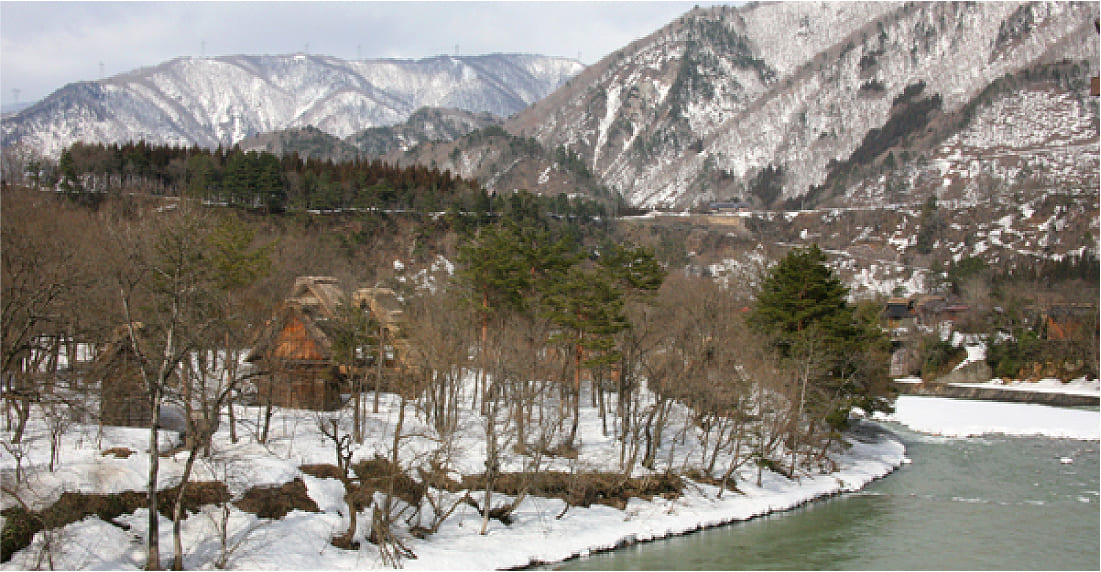
About an hour's drive from WANOSATO lies the gassho-style village of Shirakawa-go.
It was registered as a World Cultural Heritage site in 1995, meeting criteria such as being an outstanding example of a type of building, ensemble of buildings, or technology, or landscape which illustrates significant stages in human history.
In the Hida region, one of Japan's heaviest snowfall areas, the sharp-angled thatched roofs likely evolved to reduce snow removal labor and provide the necessary attic space for sericulture.
Most gassho-zukuri houses face the same direction, designed to capture the sun's rays moving east to west for as long as possible, melting snow and drying the roofs.
Simultaneously, this orientation minimizes resistance to the prevailing north-south winds.
While many of these gassho-zukuri houses were demolished during Japan's post-war economic boom, Shirakawa-go and Gokayama miraculously survived due to delayed road development in their surrounding areas.
Re-thatching the large thatched roofs requires over a week of labor and effort. Mutual aid and cooperative labor continue to sustain this precious cultural heritage.
These quintessential Japanese landscapes, where the unique culture characteristic of gassho-zukuri architecture remains deeply rooted, have garnered significant international attention, including a three-star rating in the Michelin Travel Guide. Today, they bustle with visitors as major tourist attractions.
Takayama city
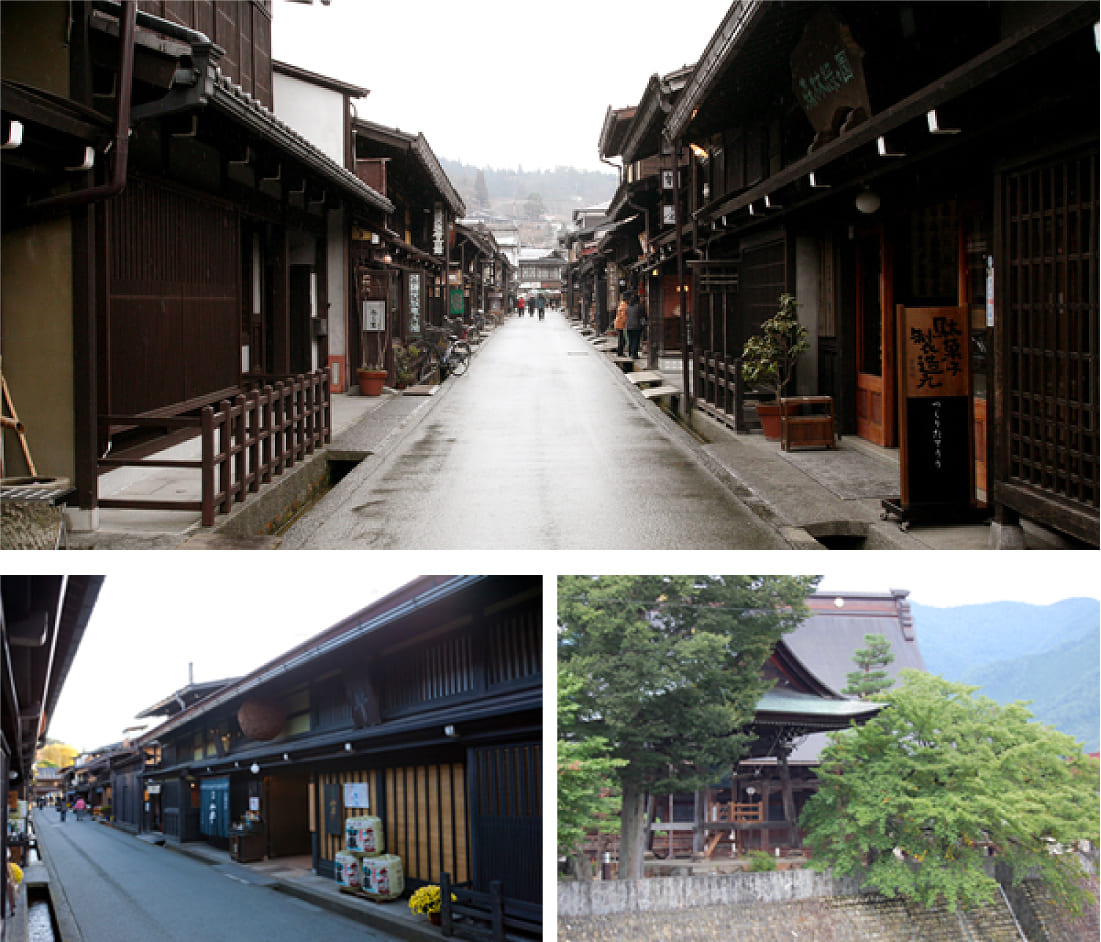
Takayama City, boasting an area comparable to the entire Tokyo Metropolis, flourished as a “mountain capital” with a vibrant merchant culture. Hida's history is ancient, seemingly dating back to the Jomon period.
Beautiful earthenware and uniquely shaped stone tools have been discovered throughout various areas of Takayama City and can be viewed at exhibition facilities within the city.
Numerous buildings and sculptures from that era preserved throughout the city have been designated as traditional cultural properties, ensuring their protection and preservation for modern times.
Thus, Takayama City developed a unique merchant culture woven from the elegant Kyoto culture of the Kanamori era and the sophisticated Edo culture of the Tenryo era, continuing to radiate an old-world charm to this day.
On November 1, 1936, it became Takayama City, and in 1986, commemorating the 50th anniversary of the city system, it received its first designation as an “International Tourism Model District” from the Ministry of Transport (at that time) and declared itself an “International Tourism City”.
Currently, it has been selected for two consecutive years in the Michelin Green Guide Japan, a travel guidebook published by Michelin, as a “must-visit tourist destination” and “a place worth a special trip,” receiving the highest rating of “three stars.”
Morning Market
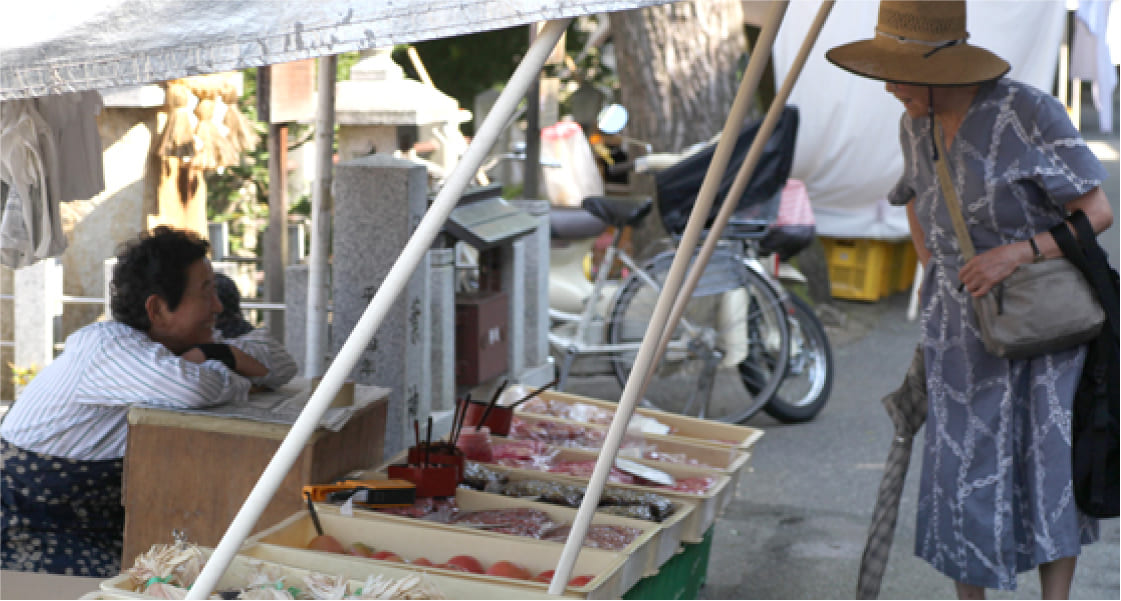
Takayama City has two morning markets : the Miyagawa Morning Market and the Jinya-mae Morning Market.
Their history is long, thriving as markets since the Edo period and seemingly serving a role similar to modern supermarkets and convenience stores.
Originally held within the grounds of Takayama Betsuin Temple, they have preserved their tradition as vital places for daily life, changing locations through various periods of turmoil. They continue to be held daily, except for January 1st.
In summer, you'll find Hida Takayama's unique cool-climate vegetables like tomatoes, eggplants, cucumbers, and white corn, along with pickles like “shinzuke” made from these vegetables, miso, and other preserved foods.
You can buy a wide variety of items directly from producers, ranging from fruits like Hida peaches, Hida melons, and plums, to custom-blended SHICHIMI-TOUGARASHI , and folk crafts like SARUBOBO dolls.
This peaceful morning market, filled with the warm sounds of the Takayama dialect, bustles daily as one of Hida Takayama's most charming tourist areas.
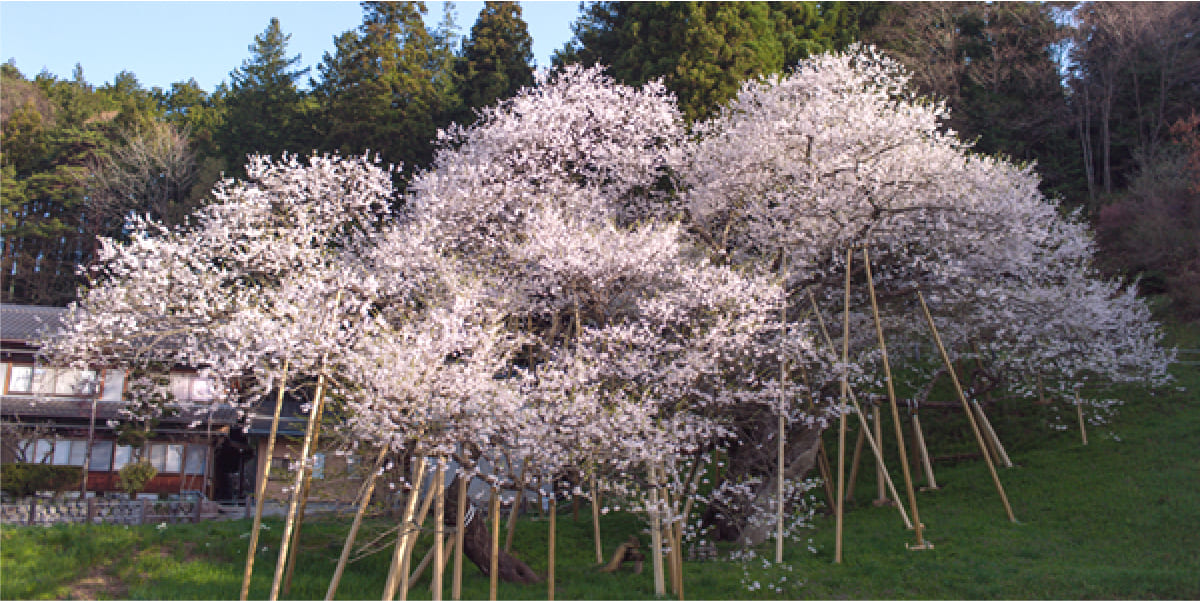
GARYU-ZAKURA
The “ GARYU-ZAKURA ” was named for its trunk and branches resembling a dragon lying down. It is a nationally designated Natural Monument.
The best viewing period is mid- to late April, coinciding with the peak bloom of cherry blossoms when the “ GARYU-ZAKURA Festival ” is held. It can be seen within GARYU Park,